⚠ FOR LABORATORY, RESEARCH, AND EDUCATIONAL PURPOSES ONLY. NOT FOR HUMAN OR VETERINARY USE OR CONSUMPTION.
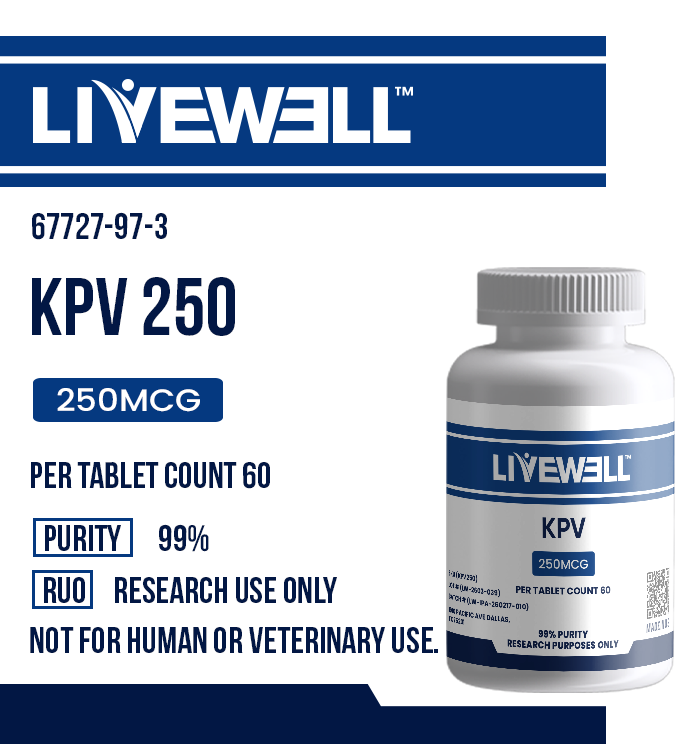
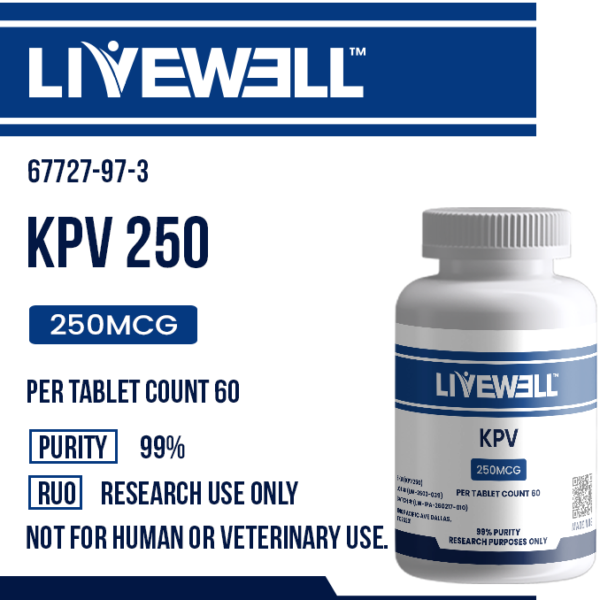
The KPV tablet is a research tripeptide product supplied by LiveWell Peptides strictly for laboratory, scientific, and educational purposes. Researchers also refer to this compound as the alpha-MSH fragment, Lys-Pro-Val, or KPV tripeptide. Each tablet contains 250 MCG of KPV at 99%+ purity, cGMP manufactured, and every batch is COA-backed. Bottles contain 100 tablets. Product ships from Dallas, Texas.
This material is sold exclusively for research and educational use. It must not be ingested by humans or animals under any circumstances.
Background
KPV corresponds to residues 11–13 at the C-terminus of alpha-melanocyte-stimulating hormone (alpha-MSH), a 13-residue melanocortin peptide with the full sequence SYSMEHFRWGKPV. Because the isolated tripeptide is reported to retain much of the parent hormone’s activity in cell-based studies while lacking the sequence motif needed for melanocortin receptor binding, it is studied as a distinct, smaller research tool rather than the full-length hormone.
Chemical information
- Name: KPV (Lysine-Proline-Valine)
- CAS Number: 67727-97-3
- Type: Synthetic tripeptide (research grade)
- Sequence: Lys-Pro-Val (C-terminal fragment of alpha-MSH)
- Molecular formula: C16H30N4O4
- Molecular weight: approximately 342.4 g/mol
Studied in
- NF-κB and MAP-kinase signalling pathway research
- Melanocortin-fragment structure-activity comparison studies
- Cytokine signalling research in cell-culture models
- Comparative research against the full-length alpha-MSH sequence
Storage & handling
- Store at controlled room temperature, away from light, heat and moisture
- Keep the desiccant in the bottle and reseal after each access
- Handle only by qualified personnel in an appropriate laboratory setting
- Follow your laboratory’s standard handling and disposal protocol
Related research compounds
KPV Vial (10mg)BPC-157 Oral TabletKLOW BlendAll research tabletsCertificates of Analysis
Frequently Asked Questions
What is the KPV tablet?
A research-grade tripeptide supplied in tablet form, intended solely for laboratory, scientific, and educational purposes. Not for human or veterinary use.
What is the chemical makeup of KPV?
KPV is a synthetic tripeptide (Lys-Pro-Val), CAS 67727-97-3, molecular formula C16H30N4O4, MW ~342.4 g/mol. Corresponds to the C-terminal fragment of alpha-MSH.
How is KPV different from alpha-MSH?
KPV is the three-residue C-terminal fragment of the 13-residue alpha-MSH hormone. Research indicates KPV lacks the sequence motif required to bind melanocortin receptors, distinguishing its research profile from the full-length hormone.
What purity is included, and is a COA available?
Each batch is 99%+ pure, cGMP manufactured, with a batch-specific Certificate of Analysis published on our COA page.
How should this material be stored?
Store at room temperature, away from light, heat and moisture, keeping the desiccant in place. Handle only by qualified personnel in an appropriate laboratory setting.
Is this product intended for human use?
No. Strictly for laboratory, research, and educational purposes only. Must never be ingested.
Disclaimer: Not a drug, dietary supplement, or food product. Not evaluated or approved by the FDA. No therapeutic or anti-inflammatory claims are made or implied.