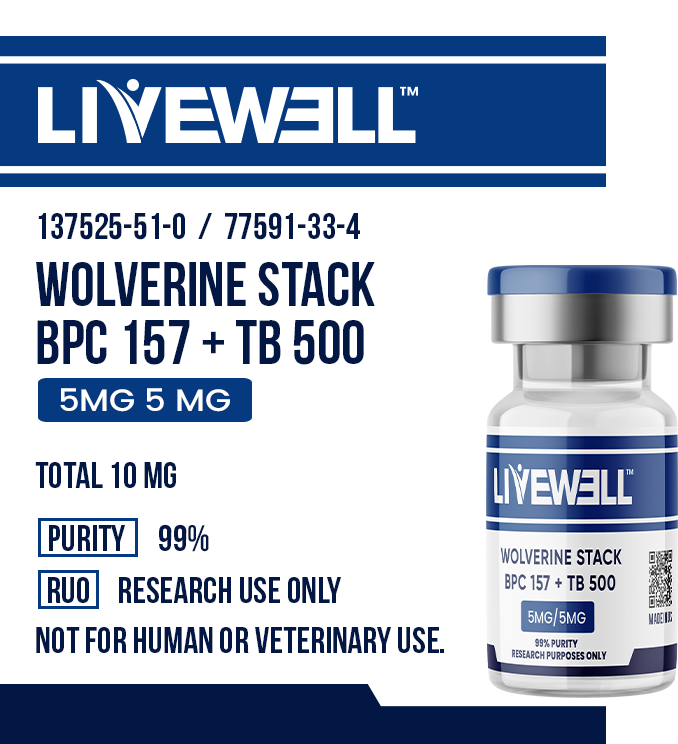
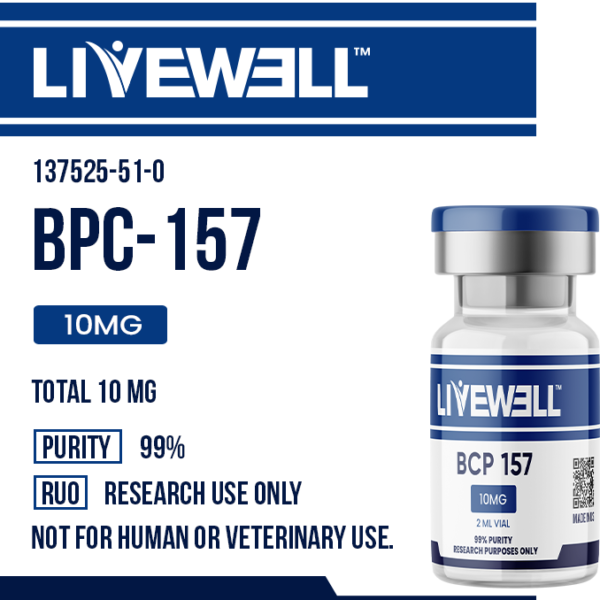
BPC-157: Synthetic Peptide for Research Use
BPC-157 (Body Protection Compound-157) is a synthetic peptide consisting of 15 amino acids, derived from a sequence found in gastric proteins. Researchers use it widely in laboratory settings to investigate its biological interactions in in vitro and preclinical studies. Specifically, research interest centres on its role in cellular signalling and its effects on various biochemical pathways.
Chemical Information
For reference, the key properties are:
- Name: BPC-157 (Body Protection Compound-157)
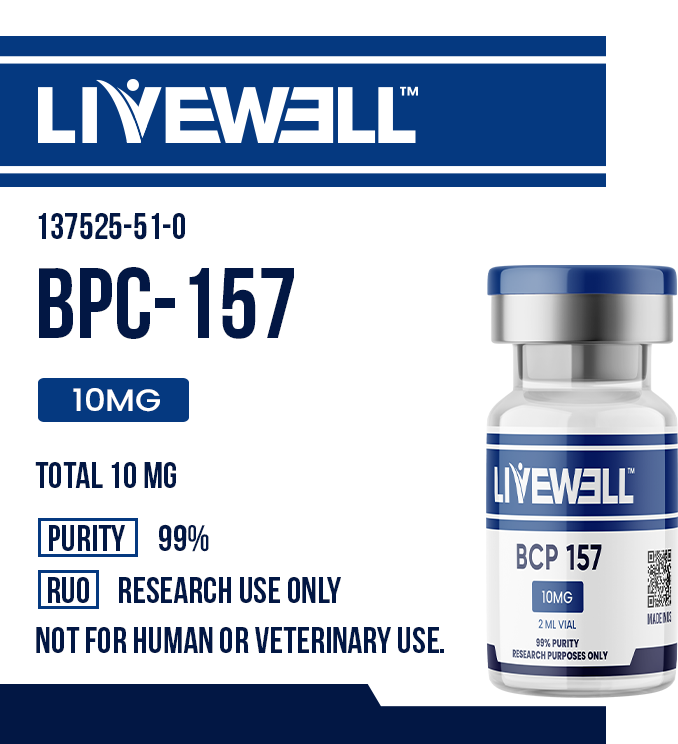
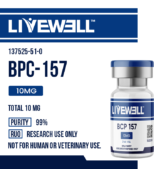
- CAS Number: 137525-51-0
- Type: Synthetic pentadecapeptide (research grade)
- Sequence: Gly-Glu-Pro-Pro-Pro-Gly-Lys-Pro-Ala-Asp-Asp-Ala-Gly-Leu-Val
- Molecular formula: C62H98N16O22
- Molecular weight: approximately 1419.5 g/mol
- Amino acid count: 15
- Vial size: 10 mg lyophilized powder
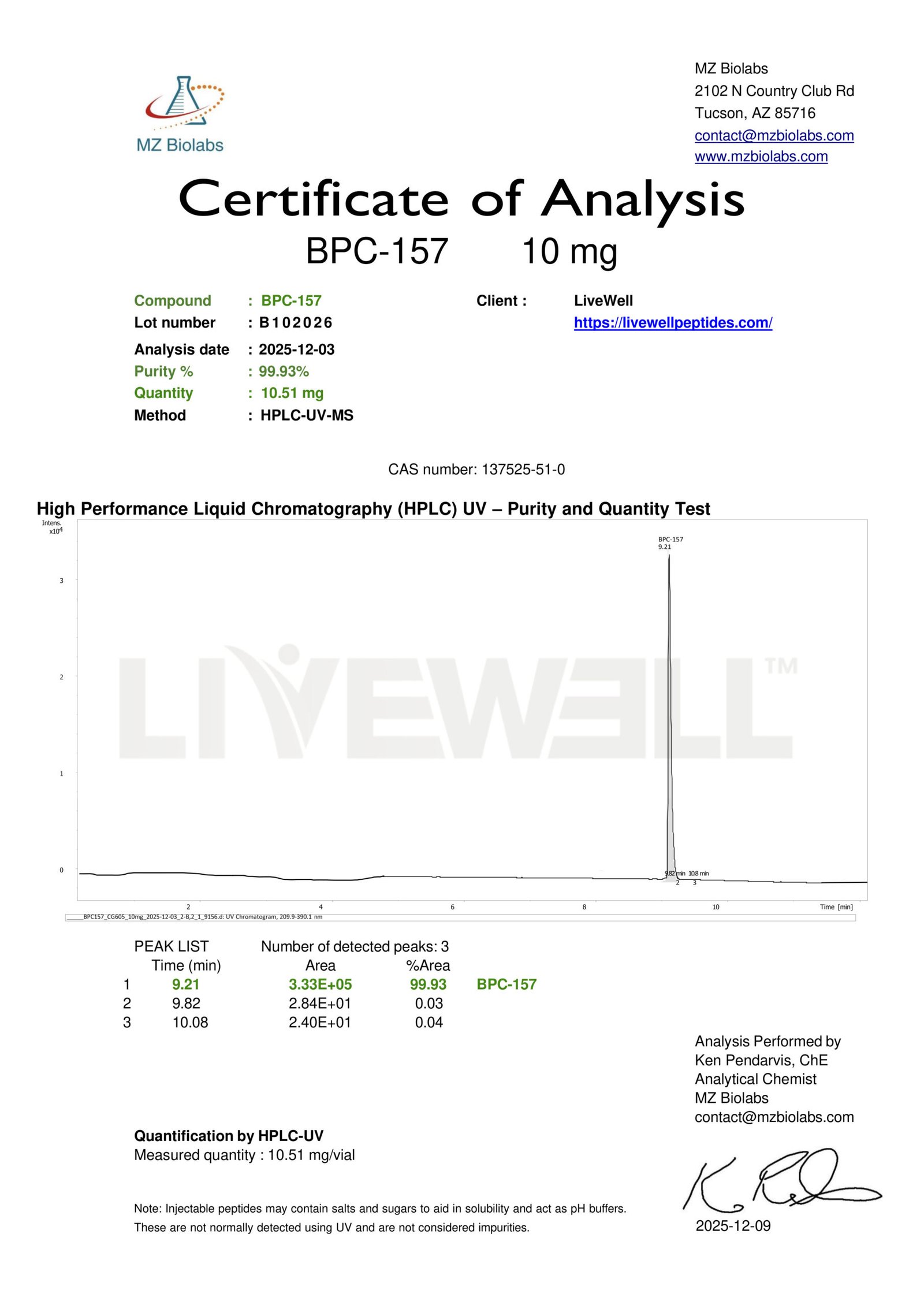
- Purity: ≥99% (HPLC, third-party tested)
Why Researchers Study BPC-157
1. Cellular signalling pathways. Preclinical models have explored BPC-157’s influence on cellular mechanisms associated with collagen activity and angiogenesis (formation of new blood vessels), prompting interest in comparative pathway research.
2. Inflammatory signalling research. In addition, animal-based research suggests BPC-157 may interact with inflammatory signalling pathways, making it a subject of interest for studies involving biological response modulation.
3. Research stability. Moreover, BPC-157 demonstrates high stability in laboratory environments and resistance to enzymatic breakdown, which supports its use across a range of experimental conditions including simulated gastric environments.
4. Versatile applications in research. As a result, researchers have examined this peptide across diverse experimental settings — including musculoskeletal models, GI environments, cardiac function studies and neural pathway investigations — primarily in non-human test subjects.
Storage & Handling
For best results, follow these storage guidelines:
- Store lyophilized vials refrigerated at 2–8°C, protected from light and heat
- Reconstitute with bacteriostatic water; reconstituted material has a shorter storage window
- Follow your laboratory’s standard peptide handling protocol
BPC-157 research reference: View study on PubMed
Buy BPC-157 Research Peptide — cGMP Manufactured in Dallas, TX
Researchers can buy BPC-157 directly from LiveWell Peptides — a gastric pentadecapeptide and one of the most extensively referenced compounds in preclinical peptide literature. We manufacture research-grade BPC-157 in our own cGMP facility in Dallas, Texas — we are the manufacturer, not a reseller.
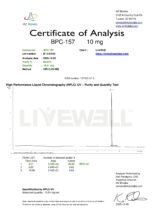
An independent laboratory tests every vial to verify ≥99% HPLC purity, amino acid identity by mass spectrometry, and endotoxin limits by LAL testing, and we publish a batch-specific certificate of analysis on our COA page.
We supply BPC-157 as a 10 mg lyophilized vial for reconstitution. US orders placed before 2pm CT (Mon–Fri) ship same-day in cold-chain packaging, with free domestic shipping on orders over $200. International shipping is available. We sell this compound strictly for research use only — not for human consumption.
Why Researchers Source BPC-157 from LiveWell Peptides
LiveWell Peptides is a US-based cGMP peptide manufacturer headquartered in Dallas, Texas, supplying research-grade peptides to laboratories, universities and qualified independent researchers across the United States and internationally.
Documentation, not claims
Every batch of BPC-157 ships with a verified certificate of analysis (COA) confirming identity and purity — for example, the COA for this product appears in the product gallery above, and we publish it on our COA page. Purity should be documented, not asserted.
Four-point analytical testing
Furthermore, we analyse each lot by HPLC for purity, mass spectrometry for amino acid identity, and LAL testing for endotoxins, with independent third-party verification on top of in-house quality control.
Available in multiple formats
Beyond this vial, we supply BPC-157 as an oral research tablet, and as a component in three LiveWell research blends — the BPC-157 / TB-500 blend, the KLOW blend and the GLOW blend.
US manufacturing and cold-chain logistics
Peptide stability depends on temperature control. For this reason, orders ship same-day from our Dallas, Texas facility in thermo-insulated packaging, with free domestic shipping over $200 and international shipping to Colombia, Mexico, Brazil, Argentina, Chile and Peru.
Bulk pricing and private label
Volume pricing applies automatically at checkout — 10% off at 3–5 units, 15% at 6–8, and 20% at 10 or more. For wholesale quantities or private label enquiries, contact our sales team.
Ready to order? Qualified researchers can buy BPC-157 today — in-stock vials ship same-day from Dallas with cold-chain packaging and a published COA.
Disclaimer: This product is sold strictly for laboratory and research use only. Not for human consumption. No medical claims are made or implied. Researchers are responsible for compliance with all applicable local, state, and federal regulations.
Related Research Compounds
BPC-157 oral tablet · TB-500 · BPC-157 / TB-500 Blend · BPC-157 vs TB-500 comparison · KLOW Blend · GLOW Blend · Certificates of Analysis
Frequently Asked Questions
What is BPC-157?
In short, BPC-157 (Body Protection Compound-157) is a synthetic pentadecapeptide — 15 amino acids, CAS 137525-51-0 — derived from a sequence found in gastric proteins. We supply it as a lyophilized vial strictly for in-vitro laboratory research.
What is the chemical makeup of BPC-157?
BPC-157 has the sequence Gly-Glu-Pro-Pro-Pro-Gly-Lys-Pro-Ala-Asp-Asp-Ala-Gly-Leu-Val, molecular formula C62H98N16O22, and a molecular weight of approximately 1419.5 g/mol. Each Certificate of Analysis includes full chemical documentation.
What purity is LiveWell BPC-157, and is a COA included?
An independent laboratory tests every batch at ≥99% purity by HPLC, with mass spectrometry identity confirmation and LAL endotoxin testing. Moreover, the batch-specific Certificate of Analysis appears in the product gallery above and on our COA page.
What is the difference between the vial and the tablet format?
This vial contains lyophilized powder requiring reconstitution with bacteriostatic water. By contrast, the oral tablet format comes pre-measured at 500 MCG per tablet and requires no weighing or reconstitution. Which suits a given study depends on the research design.
How should BPC-157 be stored and reconstituted?
First, store the lyophilized vial refrigerated at 2–8°C, protected from light and heat. Then reconstitute with bacteriostatic water; reconstituted material has a considerably shorter storage window than the lyophilized form.
Is BPC-157 a drug or supplement?
No. BPC-157 is a research compound sold strictly for laboratory and research use only. It is not a drug, dietary supplement, food or cosmetic, and it is not intended for human or animal consumption.
Comprar BPC-157 péptidos de investigación — viales de grado investigación fabricados bajo estándares cGMP en Dallas, Texas, con certificado de análisis. Envío internacional. Solo para uso en investigación.
Research Use Only Disclaimer: This product is sold strictly for in vitro laboratory research. NOT for human or animal consumption. LiveWell Peptides makes no medical claims.