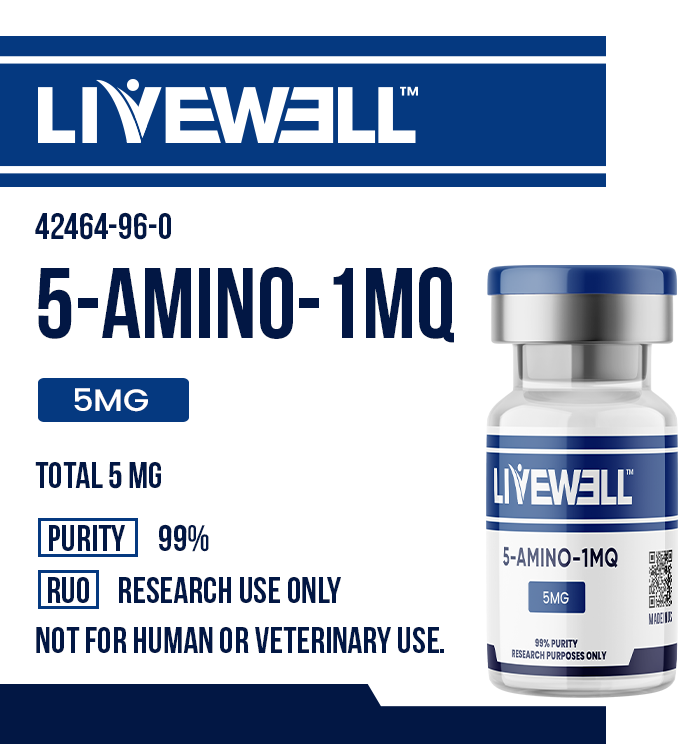

5-Amino-1MQ — NNMT Inhibitor | Research Grade
$ 46 - or subscribe and save up to 10%
5-Amino-1MQ is a small-molecule compound known to inhibit nicotinamide N-methyltransferase (NNMT). Preclinical studies suggest its potential to support various metabolic and cellular pathways relevant to energy regulation, fat metabolism, and NAD⁺ optimization.
Add $ 200 to cart and get free shipping!
| Quantity | Price | Discount |
|---|---|---|
| 3-5 | $ 44 | 4% |
| 6-8 | $ 42 | 8% |
| 10-15 | $ 41 | 11% |
| 16+ | $ 46 | $ 0 |
Description
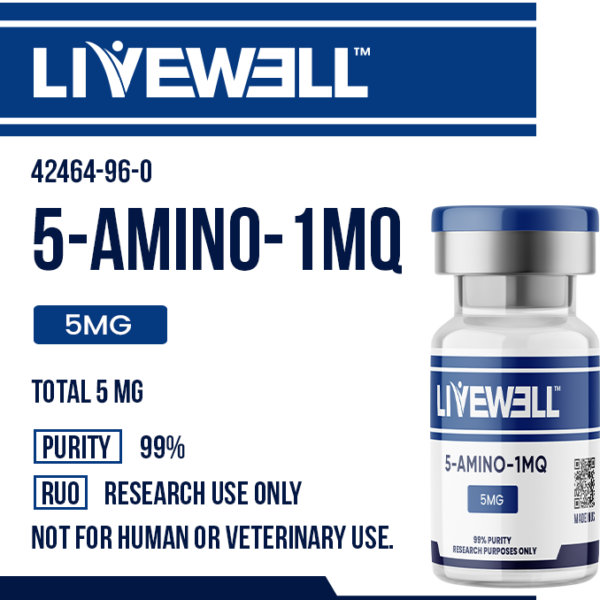
5 Amino 1MQ
For Research Use Only – Not for Human or Animal Consumption
5-Amino-1MQ is a small-molecule compound known to inhibit nicotinamide N-methyltransferase (NNMT). Preclinical studies suggest its potential to support various metabolic and cellular pathways relevant to energy regulation, fat metabolism, and NAD⁺ optimization.
Fat Metabolism & Weight Reduction
May promote fat breakdown by inhibiting NNMT activity. In animal models, 5-Amino-1MQ has been associated with reduced fat mass and overall body weight without changes in caloric intake.
Metabolic Health Support
Shown to elevate NAD⁺ levels, which may enhance insulin sensitivity and glucose regulation via SIRT1 and GLUT4 pathways.
Muscle Preservation & Recovery
Preclinical data suggest improved muscle regeneration and satellite cell activity, indicating potential in muscle repair research.
Cellular Aging & NAD⁺ Restoration
By increasing NAD⁺, studies have observed improved mitochondrial function and a decrease in senescent cell activity.
Cardiovascular Research
May help lower plasma cholesterol and support anti-inflammatory responses through lipid regulation mechanisms.
Mitochondrial Function & Energy Output
Associated with increased mitochondrial efficiency and ATP production in laboratory settings.
Inflammation Modulation
Potential reduction of pro-inflammatory markers, suggesting relevance in inflammation and aging-related studies.
Oncology Research
NNMT inhibition has shown promise in slowing cancer cell proliferation and enhancing chemotherapy sensitivity in select cell lines (e.g., HeLa), though this is still under investigation.
Neuroprotective Potential
Emerging studies indicate possible benefits for brain NAD⁺ metabolism, with implications for cognitive and neurodegenerative research.