
Epithalon (Epitalon) Research Peptide — AEDG Tetrapeptide | 10mg & 50mg

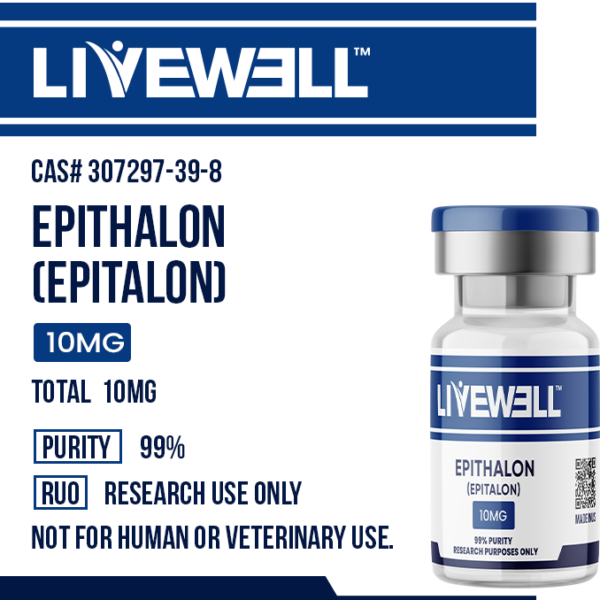
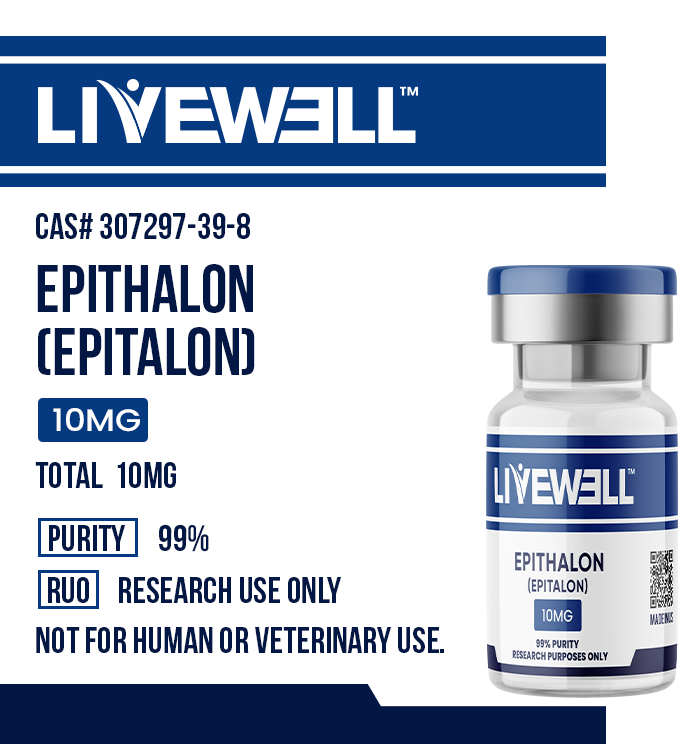
Epithalon (Epitalon) is a synthetic tetrapeptide — sequence Ala-Glu-Asp-Gly, CAS 307297-39-8 — studied in telomere biology research. Supplied in 50mg vials, for in-vitro laboratory research use only.

  • CAS Number: 307297-39-8 · MW: 390.34 g/mol
  • Also known as: Epitalon, Epithalone, AEDG peptide
  • Purity: ≥99% HPLC, third-party tested, COA included
  • Shipping: USA same-day (before 2pm CT M-F) · free over $200

Related: DSIP · SS-31 · NAD+

For laboratory research use only. Not for human or animal consumption. Full details ↓

$ 160.00

⚠️ Strictly for laboratory research use only. Not for human or animal consumption.
Quantity Price Discount
3-5 $ 144.00 10%
6-9 $ 136.00 15%
10+ $ 128.00 20%

Add $ 200.00 to cart and get free shipping!

Description

Epithalon (also spelled Epitalon or Epithalone, known as the AEDG peptide) is a synthetic tetrapeptide with the sequence Ala-Glu-Asp-Gly. It is one of the smallest peptides in active laboratory research, studied in telomere biology, gene-expression and cellular-senescence research. LiveWell supplies it strictly for in-vitro laboratory research use.

Product specifications

  • CAS Number: 307297-39-8
  • Sequence: H-Ala-Glu-Asp-Gly-OH (AEDG)
  • Molecular formula: C₁₄H₂₂N₄O₉
  • Molecular weight: 390.34 g/mol
  • Synonyms: Epitalon, Epithalone, Epithalamin, AEDG peptide
  • Available sizes: 50mg vials
  • Solubility: Water-soluble; reconstitute with bacteriostatic water

Background

Epithalon was first synthesised in the 1990s by Russian researcher Vladimir Khavinson, based on the amino acid composition of epithalamin — a peptide extract from the pineal gland.

Studied in

  • Telomere biology research — telomerase enzyme activity in in-vitro models
  • Gene-expression modulation studies — antioxidant defence and DNA-repair pathways
  • Cellular senescence research — replicative capacity in cell-culture models
  • Circadian and pineal-peptide comparative research

Quality & testing

  • ≥99% HPLC purity, third-party verified
  • Mass spectrometry identity confirmation
  • Endotoxin (LAL) tested every batch
  • Batch-specific Certificate of Analysis included
  • cGMP manufactured in Dallas, Texas (USA)

Storage & handling

  • Store at 2–8°C short-term, or −20°C long-term
  • Protect from light and moisture
  • Reconstitute with bacteriostatic water; refrigerate reconstituted material

Related research compounds

DSIP · SS-31 · NAD+ · Glutathione · MOTS-c · Certificates of Analysis

Frequently Asked Questions

What is Epithalon?

Epithalon is a synthetic tetrapeptide (Ala-Glu-Asp-Gly, CAS 307297-39-8) based on the composition of epithalamin, a pineal-gland peptide extract. Supplied as a lyophilized powder strictly for in-vitro laboratory research.

Is Epithalon the same as Epitalon or Epithalamin?

“Epithalon”, “Epitalon” and “Epithalone” are alternative spellings of the same synthetic tetrapeptide. Epithalamin is different — it’s the natural peptide extract from which Epithalon’s sequence was derived.

What is Epithalon studied for in research?

It is examined in telomere biology, gene-expression modulation and cellular senescence research, primarily in in-vitro and preclinical models. Intended strictly for laboratory research use only.

What sizes are available?

Epithalon is supplied in 50mg vials,

What purity is LiveWell Epithalon, and is a COA included?

Every batch is third-party tested at ≥99% purity by HPLC, with mass spectrometry identity confirmation and LAL endotoxin testing. A batch-specific Certificate of Analysis is included.

How should Epithalon be stored?

Store at 2–8°C short-term or −20°C long-term, protected from light and moisture. Once reconstituted, refrigerate and use within a shorter window.

Is Epithalon a drug or supplement?

No. It is a research compound sold for laboratory use only, not FDA approved, not a drug/supplement/food/cosmetic. Administration to humans or animals is prohibited.

Disclaimer: This product is designated solely as a research chemical for laboratory use. Administration to humans or animals is prohibited. No therapeutic, anti-aging or longevity claims are made or implied.