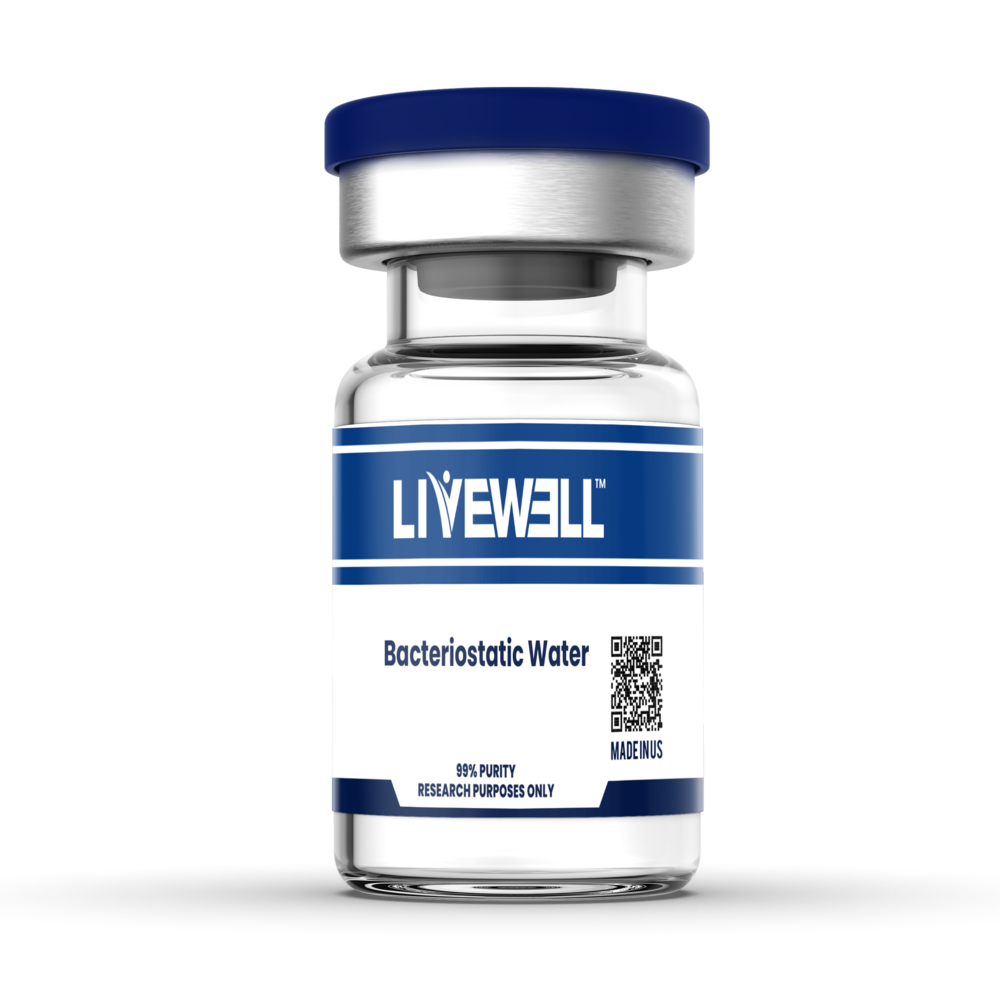
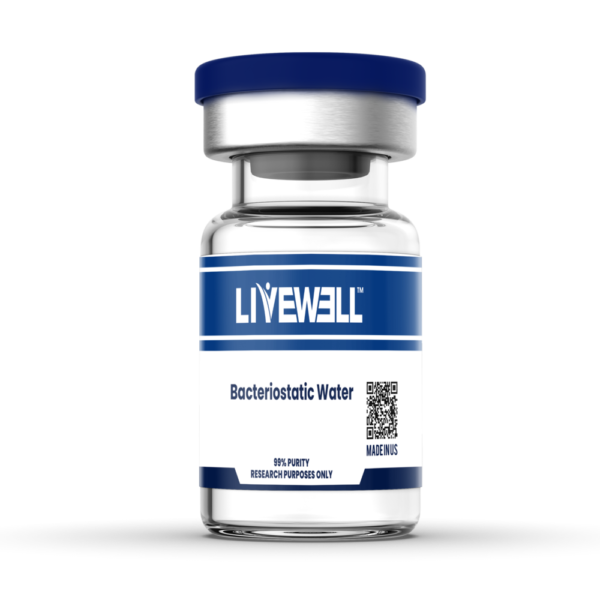
Bacteriostatic water (often abbreviated BAC water) is sterile water containing 0.9% benzyl alcohol as a bacteriostatic agent. It is used in laboratory workflows as a diluent for reconstitution of lyophilized research peptides and for analytical preparation.
Why benzyl alcohol is included: Plain sterile water has no preservative, so once the vial seal is punctured it is intended for single use. The 0.9% benzyl alcohol in bacteriostatic water inhibits bacterial growth, which is why the same vial can be accessed multiple times over a working period rather than discarded after one use. This makes it the standard diluent in peptide research workflows.
Bacteriostatic water vs sterile water
|
Bacteriostatic water |
Sterile water |
| Preservative |
0.9% benzyl alcohol |
None |
| Vial access |
Multi-access over a working period |
Single access |
| Typical lab use |
Reconstituting lyophilized peptides |
Single-preparation dilution |
Available sizes
- 3 mL vial — for smaller-volume laboratory preparation
- 10 mL vial — the standard size for multi-vial research workflows
Laboratory handling
- Store at controlled room temperature, away from direct light and heat
- Wipe the vial stopper with an alcohol prep before each access
- Use a fresh sterile needle for each withdrawal to preserve the integrity of the vial
- Once a lyophilized peptide is reconstituted, refrigerate at 2–8°C and note that the storage window shortens considerably
- Follow your laboratory’s standard handling and disposal protocol
Research reference: View study on PubMed
Buy Bacteriostatic Water for Peptide Reconstitution — USA Shipping
LiveWell Peptides supplies bacteriostatic water in 3 mL and 10 mL vials for laboratory reconstitution work. US orders placed before 2pm CT (Mon–Fri) ship same-day, with free domestic shipping on orders over $200. International shipping is available.
Bacteriostatic water is the standard diluent used when preparing lyophilized research peptides for in-vitro study. Researchers typically order it alongside the compounds they are working with, since every lyophilized vial requires reconstitution before analytical work can begin.
Commonly ordered with: BPC-157 · TB-500 · GHK-Cu · Semaglutide · Tirzepatide · CJC-1295 + Ipamorelin · All peptide vials · All peptide blends
Sección en Español
Comprar agua bacteriostática — agua estéril con 0.9% de alcohol bencílico, utilizada como diluyente en la reconstitución de péptidos liofilizados en laboratorio. Disponible en viales de 3 mL y 10 mL. Envío internacional. Solo para uso en investigación.
Research Use Only Disclaimer: This product is designated solely as a research chemical for laboratory use. It is limited to in vitro studies and experimental research, with all website information provided for educational purposes only. Administration to humans or animals is prohibited. It is not a drug, food, or cosmetic and must not be misrepresented, improperly used, or mislabeled as such.
Frequently Asked Questions
What is bacteriostatic water used for?
In laboratory settings, bacteriostatic water is used as a diluent to reconstitute lyophilized (freeze-dried) research peptides, returning the powder to solution so it can be measured and studied. It is also used in general analytical preparation.
What is the difference between bacteriostatic water and sterile water?
Bacteriostatic water contains 0.9% benzyl alcohol, which inhibits bacterial growth and allows the vial to be accessed more than once. Sterile water contains no preservative, so it is intended for single use once the seal is broken.
Why does bacteriostatic water contain benzyl alcohol?
Benzyl alcohol acts as a bacteriostatic agent — it prevents bacteria from multiplying in the solution. This is what allows a single vial to be used across multiple preparations during a working period rather than being discarded after one access.
What sizes are available?
LiveWell supplies bacteriostatic water in 3 mL and 10 mL vials. The 10 mL size is the more common choice for researchers reconstituting several peptide vials.
How should bacteriostatic water be stored?
Store at controlled room temperature away from direct light and heat. Wipe the stopper with an alcohol prep before each access and use a fresh sterile needle for each withdrawal.
How long does bacteriostatic water last once opened?
Manufacturers of bacteriostatic water typically state a working period of around 28 days after first access, provided the vial is stored correctly and handled aseptically. Always follow your laboratory’s own protocol and the expiry printed on the vial.
Do I need bacteriostatic water for lyophilized peptides?
Lyophilized peptides are supplied as a dry powder and must be returned to solution before any analytical work. Bacteriostatic water is the diluent most commonly used for this in peptide research, because the preservative allows repeated access to the same vial.
Is this product for human use?
No. This bacteriostatic water is supplied strictly as a laboratory research chemical. It is not a drug, food or cosmetic, and administration to humans or animals is prohibited.